Meditation for Business & Business Mindfulness Programs
INSCAPE provides live meditation for business and business mindfulness programs designed to give employees practical skills for managing stress, improving focus and responding more deliberately to workplace challenges.
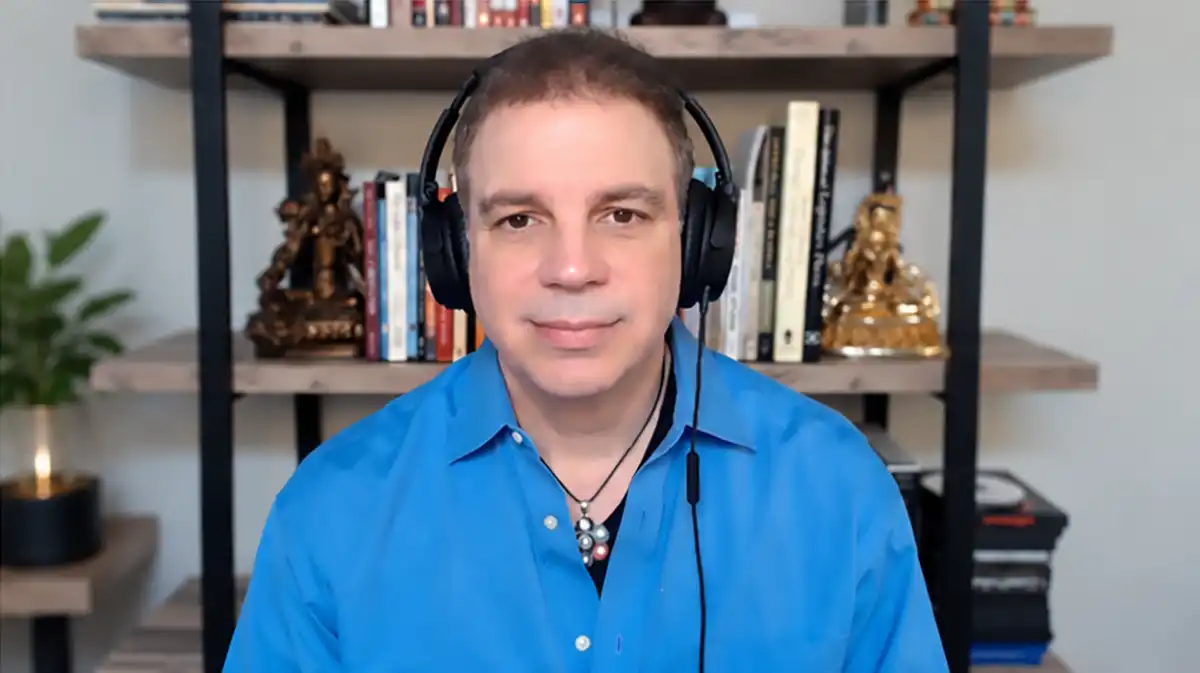
Since 2015, INSCAPE has provided professionally guided mindfulness meditation to companies, corporations and organizations. Businesses can schedule individual sessions, introductory classes, workshops, structured programs or ongoing live meditation. Programs can be delivered virtually, making professional mindfulness instruction accessible to employees wherever they work.
INSCAPE provides live meditation for business and business mindfulness programs that teach employees practical techniques for managing stress, improving focus and bringing greater awareness to the workday.
Meditation for business is professionally guided meditation sessions and programs taught in a workplace context to help employees develop practical skills for working with attention, stress, distraction and emotional reactions. Rather than treating meditation solely as a personal wellness activity, business meditation connects mindfulness techniques with situations employees regularly encounter at work.
An employee might use mindful breathing before an important presentation. Someone working on a demanding project can practice recognizing when attention has wandered and deliberately returning to the task. A manager may become more aware of frustration during a difficult conversation and pause before responding.
These applications illustrate an important distinction. Meditation for business does not eliminate deadlines, difficult conversations, organizational change or demanding workloads. Instead, it gives employees techniques they can practice and use when those situations occur.
INSCAPE’s approach to business meditation emphasizes practical skills that can be incorporated into normal professional life. Employees do not need previous meditation experience, special equipment or extensive periods of free time to begin learning mindfulness.
What Is Business Mindfulness?
Business mindfulness is the application of mindfulness awareness and practices to situations people encounter while working. Mindfulness involves intentionally bringing attention to present experience and becoming more aware of thoughts, emotions, physical sensations and reactions.
Within a business environment, this can mean noticing that attention has shifted away from an important assignment. It can mean recognizing frustration before responding to an email. It can mean realizing during a meeting that you are preparing your response instead of listening to the person speaking.
Business mindfulness is therefore not limited to the time employees spend meditating.
Meditation provides an opportunity to practice awareness. The broader objective is for participants to become increasingly capable of recognizing what is happening with their attention and reactions throughout the workday.
This practical connection between meditation and professional life is central to INSCAPE’s corporate mindfulness programs.
Why Are Businesses Interested in Meditation and Mindfulness?
Modern employees operate in an environment of almost continuous demands on their attention. Email, meetings, messaging platforms, project-management systems, customer requests, notifications, deadlines and unexpected problems can compete for attention throughout the day.
Managers face many of the same demands while also making decisions, supporting employees, resolving problems and responding to changing organizational priorities.
Companies routinely invest in technologies and systems intended to make work more efficient. Mindfulness addresses a different element of professional performance: an individual’s awareness of their own attention and reactions.
A project-management platform can organize assignments, but it cannot make an employee recognize that they have become distracted. A communication platform can deliver a message immediately, but it cannot prevent someone from reacting impulsively to a frustrating message.
Mindfulness operates at this more individual level by helping people practice recognizing what their minds are doing and deliberately redirecting attention when appropriate.
What Does Research Say About Meditation in the Workplace?
Scientific research into workplace meditation and mindfulness has expanded substantially. The findings provide reasons for organizations to consider mindfulness while also demonstrating why exaggerated promises should be avoided.
A 2019 systematic review and meta-analysis published in the Journal of Occupational Health Psychology examined 23 studies of workplace mindfulness training. The researchers reported beneficial effects for mindfulness and perceived stress, as well as anxiety, psychological distress, well-being and sleep. The researchers also found that available evidence was insufficient to draw conclusions about work performance.
Research has expanded considerably since that review. A 2026 systematic review and meta-analysis examined 132 randomized controlled trials involving 23,080 participants. The researchers reported statistically significant improvements in perceived stress, job stress, psychological distress, anxiety, depression, well-being, resilience and sleep. However, they also cautioned that results should be interpreted carefully because of heterogeneity among studies, risk of bias and varying levels of evidence certainty.
A separate systematic review and meta-analysis examining mindfulness-based programs and work performance found evidence of improvements in some measures, including adaptive and contextual performance. However, the researchers rated confidence in the results as very low.
The evidence therefore supports a measured approach. Businesses should not expect meditation to automatically increase productivity, eliminate burnout or solve organizational problems. There is stronger evidence supporting mindfulness and meditation as tools that can help employees with areas such as perceived stress, well-being and related psychological outcomes.
Business Meditation and Workplace Stress
Stress is one of the most common reasons organizations explore meditation.
Employees may face tight deadlines, customer demands, organizational change, competing responsibilities, difficult conversations and uncertainty. Managers may encounter those same pressures while also being responsible for teams and organizational outcomes.
Business meditation does not remove these sources of stress. Instead, mindfulness can help employees become more aware of how they are responding when stressful situations arise.
Business meditation gives employees an opportunity to practice mindfulness techniques they can use when navigating workplace stress, demanding projects, presentations and difficult conversations.
Consider an employee who receives an email that immediately causes frustration. Their first impulse might be to respond defensively. Mindfulness can help the employee notice that reaction before acting on it. That awareness creates an opportunity to reread the message, consider the context and determine how they actually want to respond.
The stressful situation has not disappeared. What has changed is the employee’s opportunity to respond more deliberately.
Meditation for Business and Employee Focus
Attention has become one of the most frequently interrupted resources in modern organizations.
An employee begins working on an important project. An instant message arrives. They return to the project and receive an email notification. A meeting begins. When the meeting ends, another responsibility demands attention.
Even when external interruptions stop, internal distractions continue. Thoughts about deadlines, unfinished assignments, earlier conversations and future responsibilities can repeatedly pull attention away from the task at hand.
One of the fundamental practices in mindfulness meditation is noticing when attention has wandered and returning it to an intended focus.
During meditation, participants might focus on breathing. Inevitably, thoughts arise and attention moves somewhere else. Participants practice recognizing that this has happened and deliberately returning attention to the breath.
The objective is not perfect concentration. Human attention naturally wanders. The practical skill is becoming better at recognizing distraction and intentionally redirecting attention.
Mindfulness and Emotional Reactions at Work
Frustration, nervousness, disappointment, enthusiasm, uncertainty and excitement are normal parts of professional life. Mindfulness does not teach employees to eliminate these emotions.
Instead, mindfulness encourages greater awareness of emotional reactions before those reactions automatically determine what happens next.
A manager who receives criticism during a meeting might immediately feel defensive. Recognizing that reaction can create an opportunity to continue listening before deciding how to respond.
An employee who becomes angry while reading an email may recognize that sending an immediate response is probably not the best choice. Someone who feels nervous before an important presentation may use breathing techniques to settle their attention before beginning.
These applications demonstrate why meditation for business can become a practical workplace skill rather than simply another employee benefit.
Business Mindfulness and Workplace Communication
Mindfulness can also be relevant to communication because effective communication requires attention.
During conversations, employees may notice that they are only partially listening because they are thinking about their next response. Managers may become aware that frustration from an earlier situation is affecting the way they are speaking with someone else.
Mindfulness provides practice in recognizing these shifts in attention and emotional state.
That does not mean a meditation class automatically creates better teams. Effective collaboration also depends on leadership, communication, trust, organizational culture and clearly defined responsibilities.
Mindfulness can complement those factors by giving individuals additional tools for becoming more aware of how they listen, communicate and react.
Guided Meditation for Employees
Employees who have never meditated may have misconceptions about what meditation involves. Some believe they must completely clear their minds. Others assume meditation requires a particular sitting position, long periods of practice or adherence to specific spiritual beliefs. Meditation for employees can instead be taught as a practical skill through straightforward professional instruction.
A live instructor can explain where participants should direct their attention, what to do when thoughts arise and how to approach common experiences such as distraction, restlessness or physical discomfort.
Participants also have an opportunity to ask questions and understand why particular techniques are being practiced.
This can make live guided instruction particularly useful when an organization is introducing meditation to employees for the first time.
Live Virtual Meditation for Businesses
Workforces are increasingly distributed across offices, homes and geographic locations. This can make traditional on-site wellness programs difficult to provide equally to everyone.
Live virtual meditation removes many of these logistical barriers.
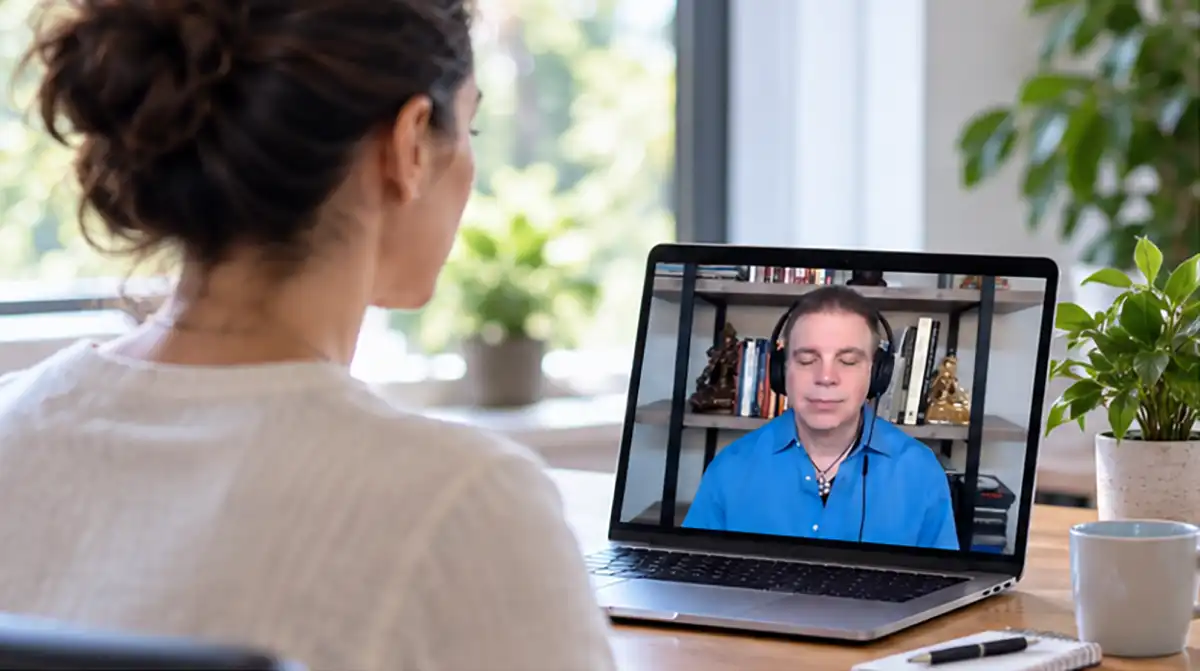
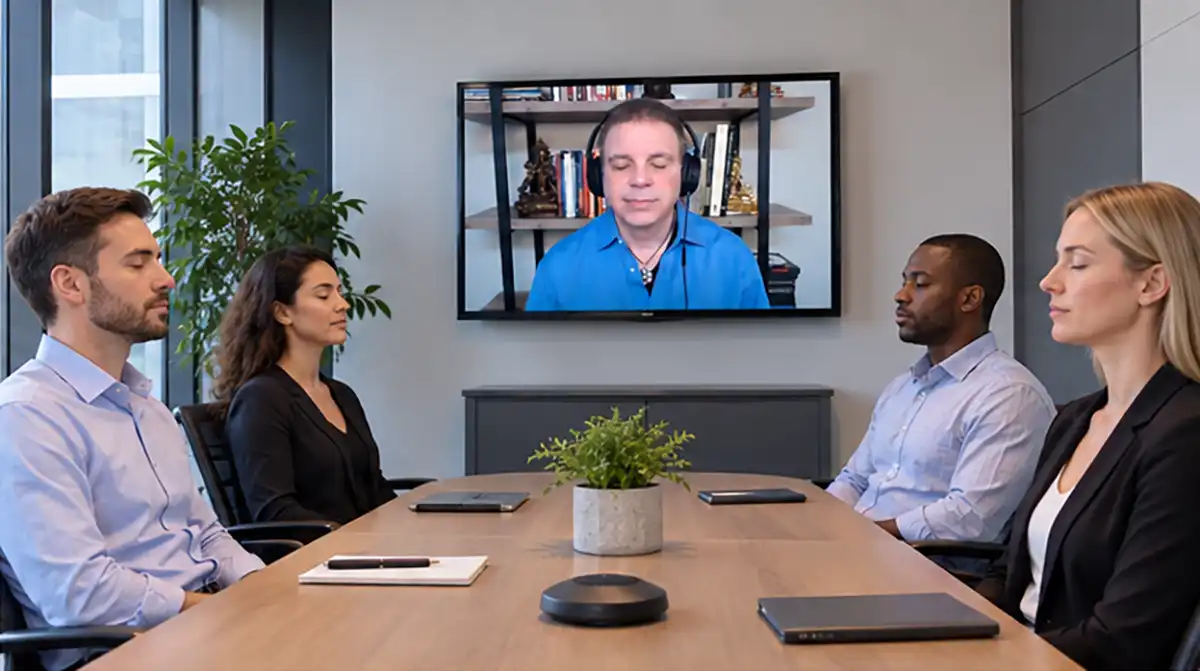
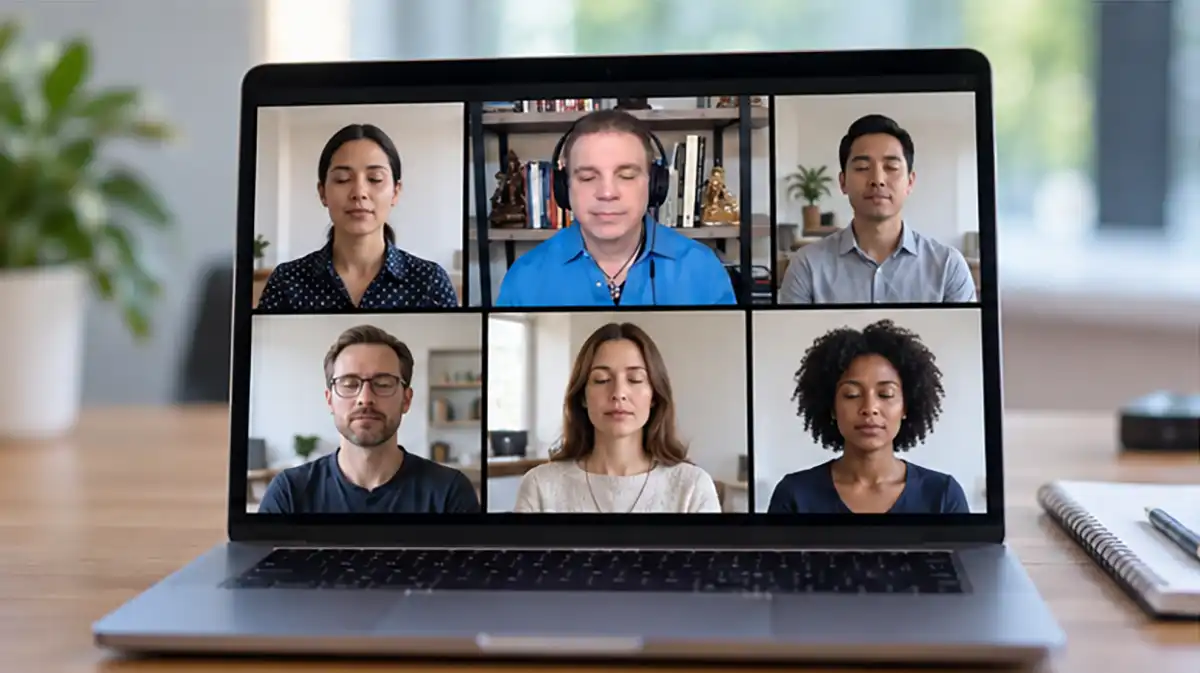
Live virtual corporate mindfulness allows employees in different offices, remote locations and hybrid workplaces to participate together in an instructor-led meditation experience.
Employees can participate from different offices or remote locations while joining the same instructor-led experience. Organizations do not need to reserve dedicated meditation rooms or arrange instructor travel for every session.
Virtual delivery is also different from simply providing employees with prerecorded meditation videos. A live instructor can introduce techniques, explain practices, answer questions and adjust future sessions based on the needs of the group.
INSCAPE provides live online meditation and mindfulness programs that allow businesses to make instructor-led mindfulness accessible to distributed, remote and hybrid teams.
Corporate Mindfulness Programs
Organizations have different objectives, schedules and workforces. For that reason, there is no single format that works for every company.
INSCAPE’s corporate mindfulness programs can be structured around the needs of an organization and its employees.
Options can include:
Introduction to mindfulness and meditation sessions
Individual corporate meditation classes
Multi-session mindfulness programs
Workshops and courses
Ongoing live meditation
Programs designed around specific organizational objectives
Live virtual sessions for remote and hybrid teams
Organizations can begin with a single session rather than immediately committing to an extensive program. This gives employees an opportunity to experience guided mindfulness and allows HR or organizational leaders to gather feedback before determining what should happen next.
How Long Should a Business Meditation Session Be?
There is no single ideal duration for every organization. The appropriate length depends on the purpose of the session, employees’ schedules and the amount of instruction involved.
Shorter sessions can make mindfulness easier to incorporate into busy workdays, while longer sessions provide more time for instruction, discussion and guided practice.
INSCAPE offers corporate classes that can be structured in different lengths, including 30-, 45- and 60-minute sessions. This flexibility allows organizations to choose a format that fits realistically into the workday rather than requiring employees to accommodate an inflexible program.
How Can a Company Start a Business Mindfulness Program?
A company does not need to launch a large-scale initiative immediately.
One practical approach is to begin with an introductory mindfulness class. Employees can learn what mindfulness meditation involves, experience several techniques, participate in guided meditation and ask questions.
Afterward, the organization can collect voluntary feedback. Did employees find the experience useful? Would they participate again? Are there specific mindfulness techniques or workplace challenges they would like future sessions to address?
If employees respond positively, the company can move toward additional sessions or a structured program.
This approach allows employee experience to guide the decision rather than assuming in advance what type of program people need.
Should Business Meditation Be Voluntary?
Organizations should generally make employee meditation opportunities voluntary. Mindfulness is more likely to be viewed as a genuine wellness resource when employees can decide whether they want to participate.
At the same time, organizations can make participation easier by scheduling sessions during the workday.
An activity employees are told to complete “when they have time” may continually be postponed as meetings, deadlines and customer needs take priority. A scheduled session creates a defined opportunity to participate and signals that the organization genuinely supports employees taking the time to attend.
Mindfulness Should Complement Good Management
Mindfulness should never be used as a substitute for addressing workplace problems an organization has the responsibility and ability to change.
If employees are chronically overloaded because a company is understaffed, meditation does not resolve the staffing problem. If poor management is damaging morale, mindfulness does not eliminate the need for better leadership. Issues involving unreasonable workloads, inadequate resources, compensation or organizational culture require organizational solutions.
Mindfulness serves a different purpose.
Even within well-managed organizations, employees experience deadlines, distraction, uncertainty, difficult conversations and emotional reactions. Meditation gives employees practical techniques for working with these normal aspects of professional life.
The strongest business mindfulness initiatives therefore complement good organizational practices rather than attempting to replace them.
How Should HR Evaluate a Meditation for Business Program?
Before launching a program, organizations should determine what they hope to accomplish.
The objective may be to provide employees with stress-management techniques. Another organization may be interested in attention and focus. Others may want to make mindfulness part of a broader employee wellness initiative.
Once the objective is clear, HR can evaluate whether employees are participating and whether they consider the sessions worthwhile.
Participation and repeat attendance can provide useful information, particularly when sessions are voluntary. Organizations can also gather anonymous or voluntary feedback about the program, session length, scheduling and topics.
Companies should be cautious about attributing every change in productivity, retention, absenteeism or morale directly to meditation. Workplace outcomes are affected by many variables.
A more useful question is whether employees are learning techniques, finding the sessions valuable and using mindfulness practices outside the formal class.
Since 2015, INSCAPE has provided live meditation and corporate mindfulness programs for businesses, corporations and organizations, from introductory sessions to ongoing mindfulness programs.
Why Choose INSCAPE for Meditation for Business?
INSCAPE has provided mindfulness and meditation programs for businesses, corporations and organizations since 2015.
Rather than simply providing employees with prerecorded content, INSCAPE emphasizes live professional instruction and practical mindfulness skills employees can learn, practice and use independently.
Organizations can choose individual sessions, workshops, courses, structured programs or ongoing meditation. Programs can be customized around an organization’s objectives and delivered virtually for employees working in different locations.
INSCAPE also offers live ongoing meditation opportunities, giving organizations and individuals access to regularly scheduled instructor-led practice.
Whether your company is exploring meditation for the first time or looking to develop a more comprehensive corporate mindfulness initiative, INSCAPE can help create a program appropriate for your employees and organization.
Learn more about INSCAPE Corporate Mindfulness Programs
Frequently Asked Questions About Meditation for Business
What is meditation for business?
Meditation for business is professionally guided meditation taught within a workplace context. Employees learn mindfulness techniques they can use to work with stress, distraction, attention and emotional reactions during normal professional situations.
What is business meditation?
Business meditation is meditation provided to employees, teams, managers or organizations as part of workplace wellness, professional development or a broader mindfulness initiative. Sessions may be offered individually or as part of an ongoing program.
What is business mindfulness?
Business mindfulness is the application of mindfulness awareness and practices to professional life. Employees learn to become more aware of attention, thoughts, emotions and reactions and to respond more deliberately to workplace situations.
What is corporate mindfulness?
Corporate mindfulness refers to mindfulness practices, classes and programs offered within companies and organizations. Programs can include introductory sessions, guided meditation, workshops, courses and ongoing live mindfulness practice.
What are the benefits of meditation for employees?
Research on workplace meditation has found evidence of benefits in areas including perceived stress, psychological distress, anxiety, well-being and sleep. Results vary among studies, and meditation should not be presented as a guaranteed method for improving productivity or solving organizational problems.
How long should corporate meditation sessions be?
Session length depends on the organization’s objectives and schedule. INSCAPE can provide 30-, 45- and 60-minute corporate mindfulness meditation sessions.
Can meditation for business be offered virtually?
Yes. Live virtual meditation allows employees in different offices, remote locations and hybrid workplaces to participate together in instructor-led mindfulness sessions.
Do employees need previous meditation experience?
No. Business meditation programs can be designed for complete beginners. A live instructor can explain mindfulness fundamentals, guide participants through the practice and answer questions.
How should a company start a mindfulness program?
A company can begin with an introductory mindfulness session, allow employees to experience guided meditation and gather voluntary feedback. If employees find the program useful, the organization can add additional classes or develop an ongoing corporate mindfulness program.
Does workplace meditation increase productivity?
Research into mindfulness and work performance continues to develop. Some studies report positive effects on particular performance measures, but the evidence is not strong enough to promise that meditation will automatically increase employee productivity. Mindfulness is better understood as a way of developing practical skills related to attention, stress and awareness.
Bring Meditation and Mindfulness to Your Organization
Companies do not need to begin with a large or complicated mindfulness initiative. An introductory class can give employees an opportunity to experience professionally guided meditation and determine whether they would like to continue.
INSCAPE provides meditation for business, business mindfulness and corporate mindfulness programs for companies and organizations. Choose an individual session, workshop, structured program or ongoing mindfulness experience based on the needs of your workforce.
Explore Corporate Mindfulness Programs